


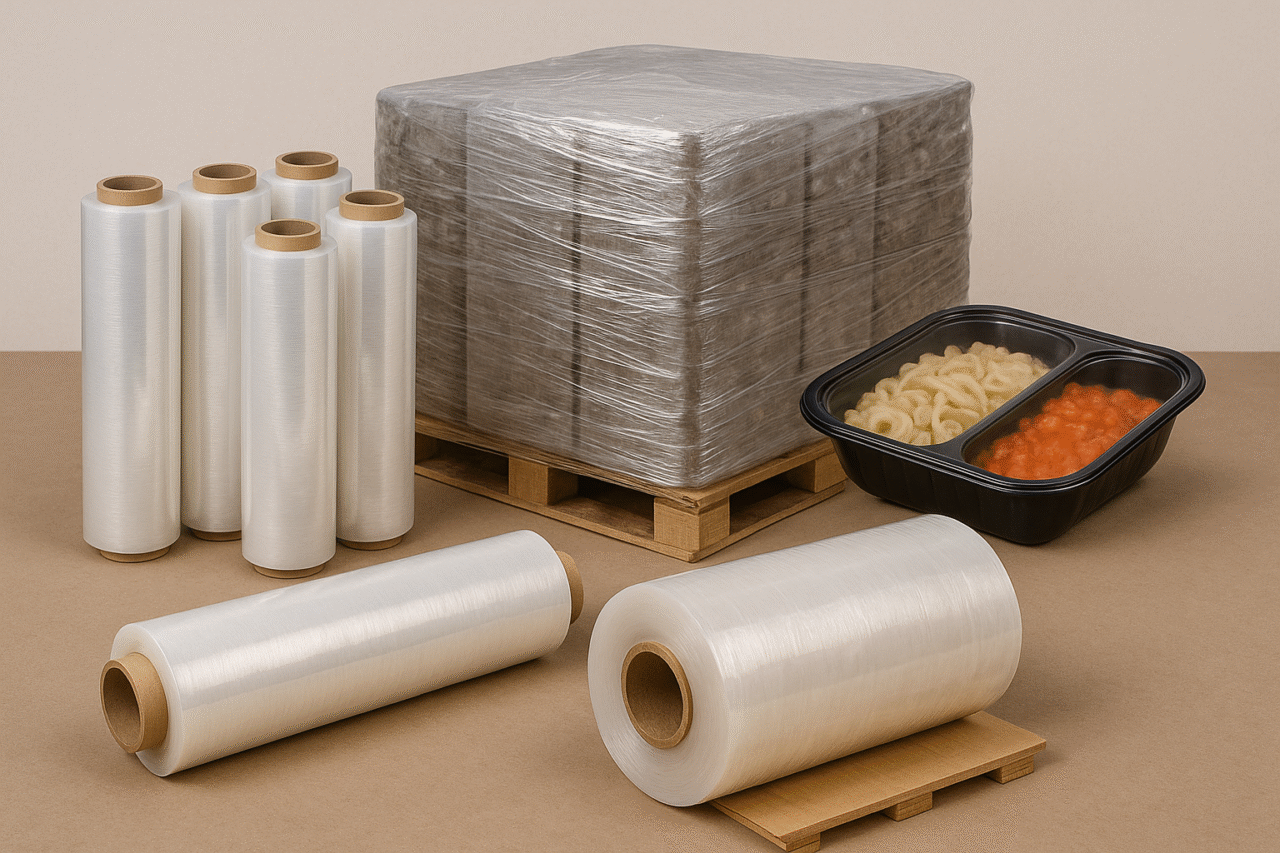
Packaging film is one of the most popular materials for protecting, preserving, and transporting goods. The market offers many types of films, each with its own features and purposes. Let’s take a look at the main types of packaging film and their applications.
Main Types of Packaging Film
- Stretch Film
A flexible transparent film used for wrapping pallets, groups of goods, or individual items. It securely fixes the load and protects it from dust and moisture. - HDPE Film (High-Density Polyethylene)
Known for high strength and puncture resistance. Used for packaging food products, construction materials, and chemical products. - LDPE Film (Low-Density Polyethylene)
Flexible, elastic, and thin, widely used for producing bags and packaging lightweight goods. - Shrink Film
Shrinks in size when heated, tightly wrapping the package. Ideal for packaging grouped goods, protecting them from damage and moisture. - Bubble Wrap Film
Used for protecting fragile items during transportation. Provides cushioning and reduces the risk of mechanical damage.
Applications of Packaging Film
- Manufacturing and logistics: protecting loads in warehouses and during transportation
- Food industry: packaging products to maintain freshness and prevent contamination
- Construction: covering materials, insulation, and protection from weather conditions
- Household use: packing items during moving or storage
Advantages of Packaging Film
- Protects from dust, dirt, and moisture
- Reduces the risk of damage during transportation
- Easy to use and economical
- Possibility to add printing and branding
The variety of packaging film types allows selecting the optimal material for any task — from protecting cargo in logistics to packaging food products or construction materials. Choosing the right film improves product preservation, ensures reliability, and saves costs.